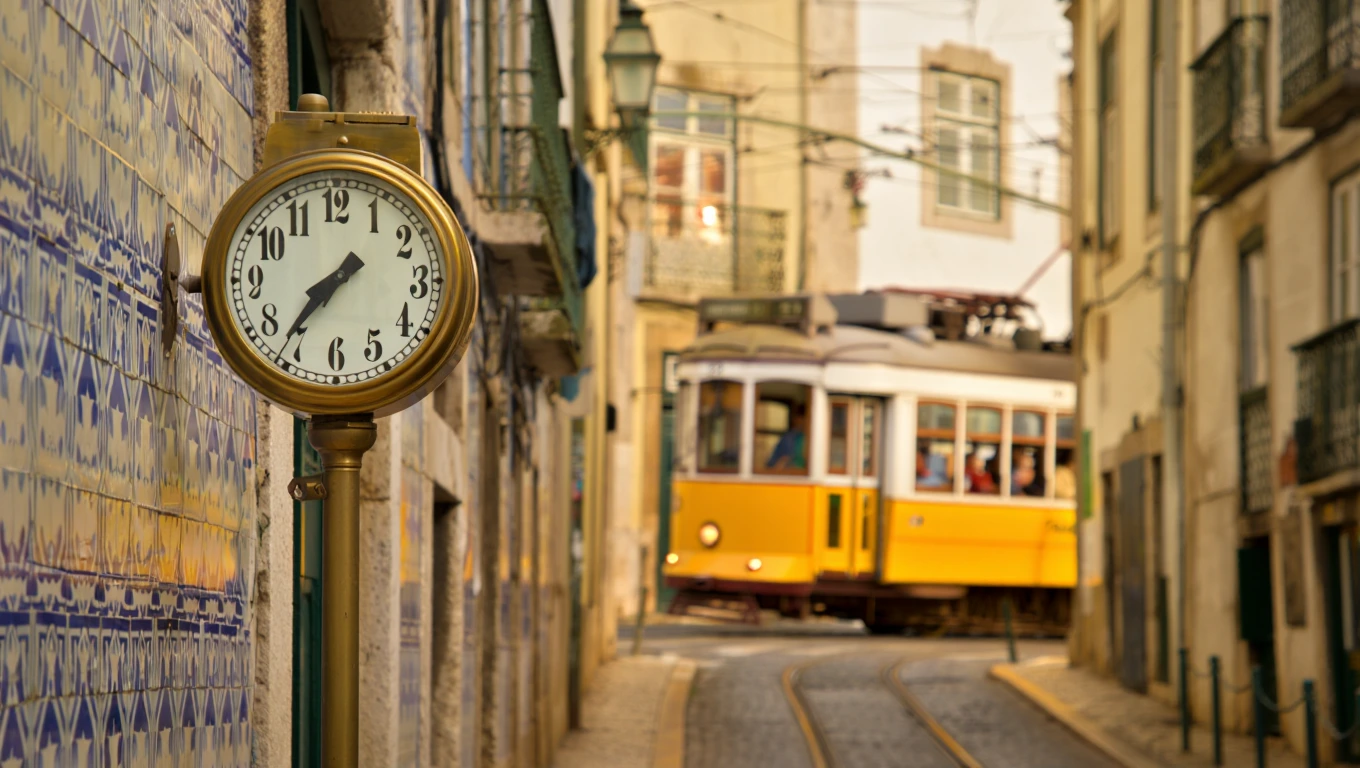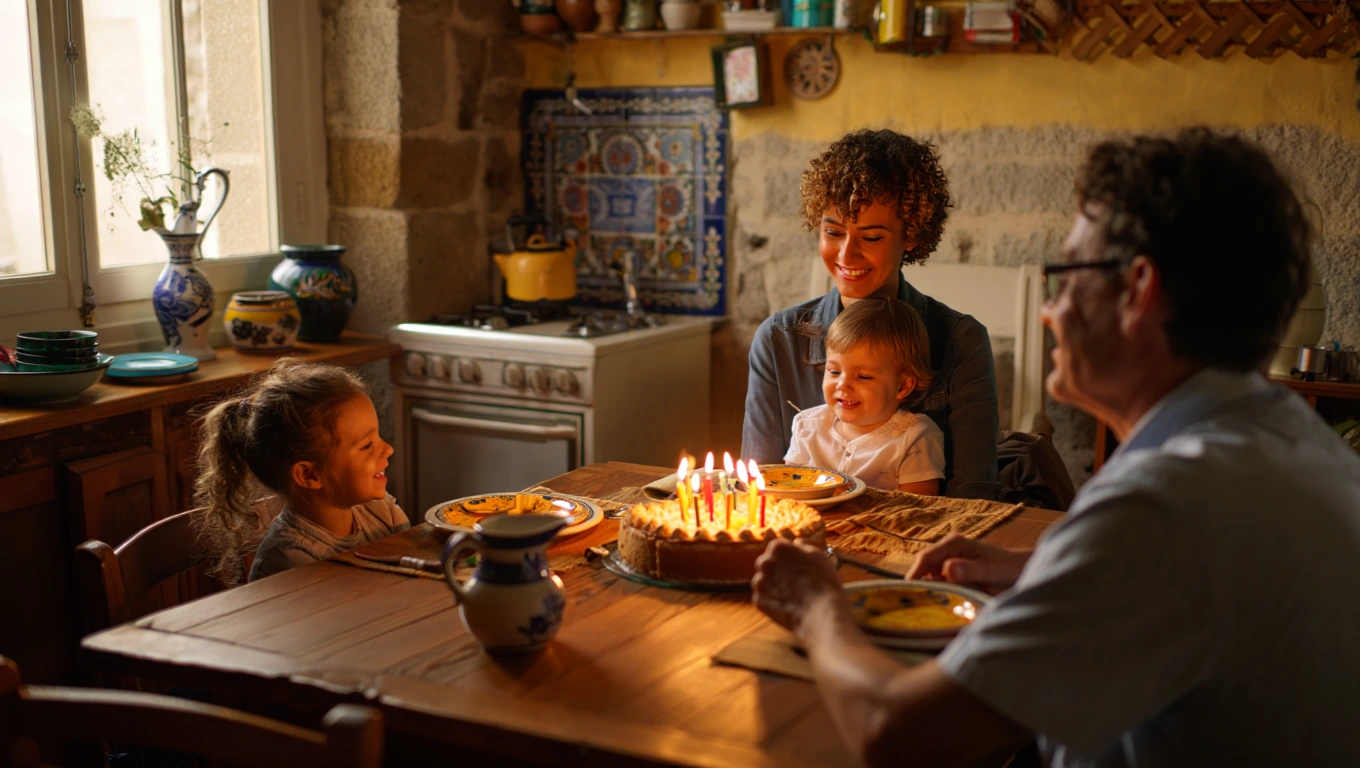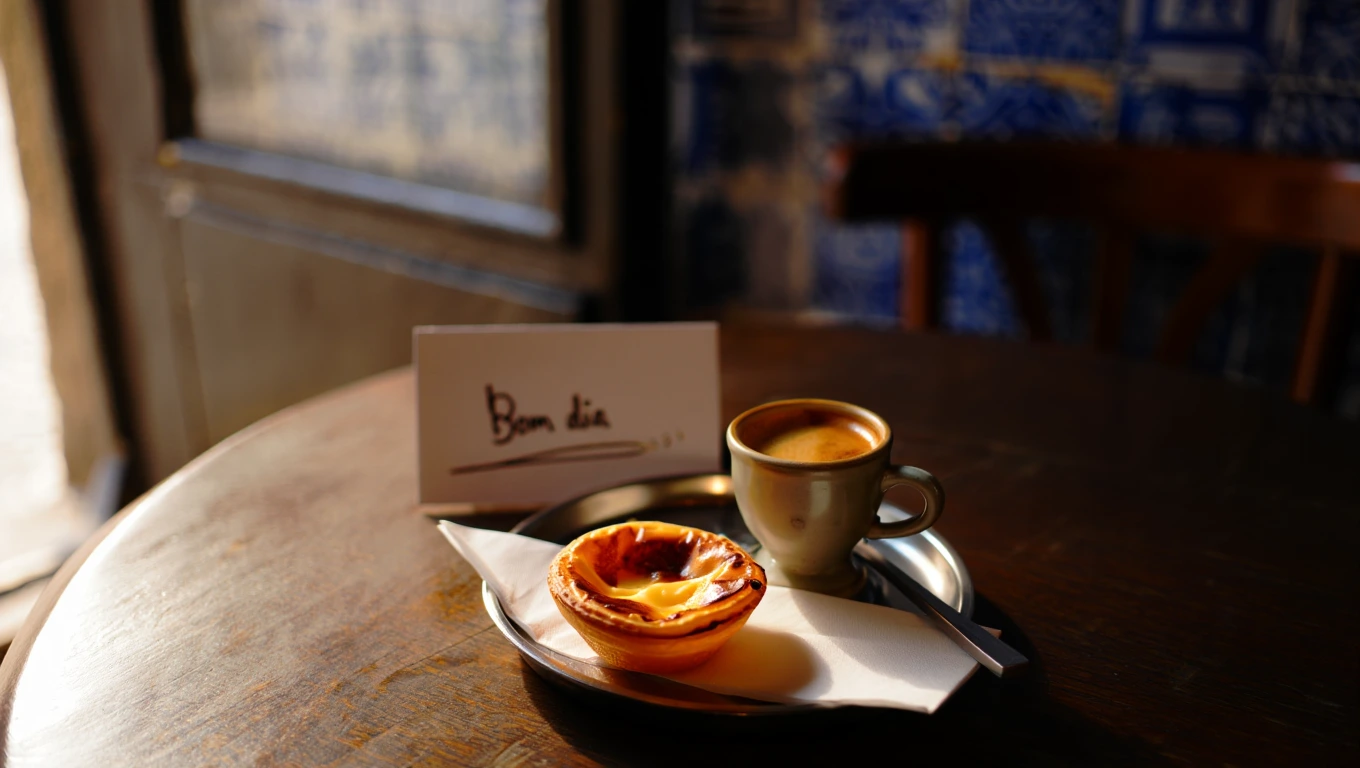
Every morning, on my way to my favourite café in Lisbon, I hear the same phrase again and again.
In this article
Bom dia.
What is curious about it is that the literal meaning of dia is day.
It comes from the baker behind the counter, from the woman ordering a coffee, from the neighbour I only recognise by face. It’s never loud or rushed. Just a small, calm exchange that opens the day.
For many people learning European Portuguese, this is one of the first phrases they meet. And yet, it often feels harder than expected.
Why “Good Morning” Feels Tricky
Many of my English-speaking students say something very similar:
“I know the words, but I don’t sound Portuguese.”
That usually has nothing to do with vocabulary. In Portugal, language is strongly connected to rhythm, tone and social distance. Saying Bom dia is not just a greeting. It’s a polite way of entering someone’s space.
Once you understand that, the phrase starts to feel different.
The Core Phrase You Really Need
Bom dia simply means good morning in European Portuguese.
You use it with strangers, colleagues, friends, shop assistants, neighbours. You hear it everywhere, from early morning until lunchtime. In many everyday situations, not saying Bom dia feels more noticeable than saying it.
It’s a small word with a big social role.
How It Actually Sounds in Portugal
Pronunciation matters, but not in the way many learners expect.
In European Portuguese:
- the “m” is nasal
- the final “a” is very short
- the phrase is often reduced in fast speech
You may hear something closer to “bo’diá” than a carefully pronounced “bom dee-ah”. This is normal. Portuguese tends to soften and shorten sounds, especially in daily conversation.
Speaking too clearly or too loudly can sometimes sound less natural than speaking a little less.
A Cultural Detail Worth Knowing
Portuguese mornings are generally quiet. People are polite, but not expressive. Keep in mind that a Portuguese morning is always relaxed and without pressure. It also reflects on their way of speaking and expressing themselves. A calm tone, brief eye contact and a simple Bom dia are enough.
A very enthusiastic greeting may sound friendly to you, but slightly foreign here. Softness works better.
Polite and Formal Variations
In more formal situations, you might hear or use:
- Bom dia, senhor
- Bom dia, senhora
- Bom dia, doutor / doutora
- Muito bom dia
The last one sounds respectful and slightly traditional. It’s still very alive in Portugal, especially among older speakers.
Friendly and Social Greetings
When addressing a group, these are common:
- Bom dia a todos
- Bom dia, amigos
- Bom dia, pessoal
- Bom dia, família
The words are simple, but the tone remains calm and unforced.
“Good Morning, How Are You?” in Real Life
A natural follow-up is:
- Bom dia, tudo bem?
Bom dia, como está? (formal) - Bom dia, como estás? (informal)
The answers are usually short. Tudo bem or Está tudo(bem), obrigado are perfectly normal. In Portugal, this exchange is polite, but it is not an invitation to a long conversation.
Romantic and Affectionate Uses
With close people, you may hear:
- Bom dia, meu amor
- Bom dia, querida / querido
- Bom dia, linda / lindo
- Bom dia, princesa
These expressions are intimate and usually said quietly. Portuguese affection is often subtle rather than expressive.
Adding a Polite Wish
In shops and workplaces, it’s common to add:
- Bom dia e bom trabalho
- Bom dia e bom fim de semana
- Bom dia e até logo
This way they gently close the interaction. In addition, there is another phrase for this purpose:
- Tenha um bom dia
This one literally means Have a nice day.
Spoken and Written Portuguese
In writing, Bom dia appears clear and complete. In speech, it becomes shorter and softer. This difference is part of the language, not a problem to fix.
Listening and repetition will do more for you than trying to pronounce every sound perfectly.
A Small Thought Before You Go
If you’re unsure about your accent, remember this: people in Portugal value politeness and effort more than precision. Your principal aim is exactly to communicate with the locals and to soften the language barrier, but it doesn’t mean you have no right to make a mistake. You’ve just begun, take your time and be patient. A simple Bom dia, said calmly, already places you inside the culture.
So tomorrow morning, how will you say Bom dia — and to whom?
Maybe to the barista or to a neighbour. Maybe to someone you don’t know yet.
Bom dia e até logo!